BISP Tharparkar Drought Relief 2026 – Rs 8,000 for 220,000 Families, Dates & Eligibility
The bisp tharparkar drought relief 2026 package is the biggest relief announcement for drought-hit families in Sindh this year: Chief Minister Murad Ali Shah has approved a Rs 5.3 billion package that will give Rs 8,000 to around 220,000 low-income families in Tharparkar and Umerkot, paid through the Benazir Income Support Programme (BISP) database. The first instalment is due on 1 December 2026, and the eligibility net has been widened by raising the poverty score limit from 32 to 40, so thousands of extra families can qualify. If your family lives in one of the drought-affected areas, this guide explains who gets the money, when it arrives, and how to check your status — and how this relief is different from the regular Rs 14,500 Benazir Kafaalat qist already being paid in Sindh.
BISP Tharparkar Drought Relief 2026 – Quick Overview
| Relief programme | Special drought assistance for Tharparkar and Umerkot (Sindh government, through BISP data) |
| Package size | Rs 5.3 billion |
| Families covered | Around 220,000 low-income families |
| Amount per family | Rs 8,000, paid in three instalments |
| Payment dates | 1 December 2026, 1 January 2027 and 1 February 2027 |
| Eligibility | BISP record, poverty (PMT) score up to 40 (raised from 32) |
| Selection method | BISP survey, geo-tagging and digital wallet accounts |
| Announced | 20 November 2026 by Chief Minister Sindh Murad Ali Shah |
| Status check | SMS CNIC to 8171 or visit 8171.bisp.gov.pk |
| Helpline | 0800-26477 (toll-free) |
What Is the BISP Tharparkar Drought Relief 2026?
The bisp tharparkar drought relief 2026 package was announced on Friday, 20 November 2026, by Sindh Chief Minister Murad Ali Shah at the launch of the Sindh Wheat Growers Support Programme 2026-27 in Karachi, which was inaugurated by Pakistan Peoples Party Chairman Bilawal Bhutto Zardari. The package is the Sindh government’s response to a severe drought that has destroyed most of this season’s crops in the desert districts of Tharparkar and Umerkot.
Under the package, each selected household will receive Rs 8,000, paid in three instalments. The first instalment is scheduled for Tuesday, 1 December 2026, the second for Friday, 1 January 2027, and the third for Monday, 1 February 2027. The money is meant to help families buy wheat, feed their livestock and meet other urgent household costs during the dry months ahead. The Chief Minister said recipients would not be told how to spend the money — families can use it according to their own needs.
The relief is being delivered through the BISP database, which is why it is being called a BISP-linked package. But it is important to understand that this is the Sindh government’s own relief, funded from the provincial package — it is separate from, and paid on top of, the regular Benazir Kafaalat qist of Rs 14,500 that eligible families already receive.

Who Will Get the Rs 8,000 Relief?
Eligibility for the drought relief is decided through BISP records. The most important change is the poverty score limit: the Sindh government has raised the eligibility threshold from a PMT (Proxy Means Test) score of 32 to a score of 40. Families with poverty scores from zero to 40 can now qualify for the payments. This single change brings thousands of additional households into the programme — families who were just above the old BISP cut-off of 32 and therefore missed out on regular Kafaalat payments can still qualify for this drought relief.
Beneficiaries are being identified through a survey that is already under way. According to reports from 19 November 2026, Mirpurkhas Divisional Commissioner Shahmir Khan Bhutto said BISP had been directed to conduct a survey of drought-affected families in Tharparkar and Umerkot, and a review meeting was held to identify the affected households. The survey is intended to find the genuinely deserving families in the affected areas, and relief work is being monitored daily.
According to official statements, the selected families are also being geo-tagged, and digital wallet accounts are being opened for them so that payments can reach them directly. The BISP digital wallet system already allows beneficiaries to withdraw funds from any of the partner banks, which should make it easier for families in remote desert villages to collect their payments without travelling long distances.
One important point: the government has not published a complete beneficiary list or a public online registration procedure for this relief. There is no separate portal or form to apply for it. If you live in Tharparkar or Umerkot and your household is in the BISP record with a PMT score up to 40, the survey and the BISP database decide your inclusion — do not pay anyone who claims they can add your name to the list for a fee.
Payment Dates – When Will the Money Arrive?
The three instalments of the bisp tharparkar drought relief 2026 package are scheduled as follows:
- First instalment – 1 December 2026: the first payment is due on Tuesday, 1 December 2026.
- Second instalment – 1 January 2027: the second payment is scheduled for Friday, 1 January 2027.
- Third instalment – 1 February 2027: the final payment is scheduled for Monday, 1 February 2027.
These dates come from the announcement made on 20 November 2026 and reported by several news outlets, including ARY News, The Nation and UrduPoint. The exact amount of each instalment has not been officially broken down yet — what is confirmed is that the total per family is Rs 8,000 across the three instalments. Do not trust any forwarded message that quotes a different per-instalment amount until the Sindh government or BISP confirms it. The first instalment is less than two weeks after the announcement, so the administration is working to finalise the list of eligible households under the new poverty-score threshold before 1 December.
Why Tharparkar Was Declared a Calamity-Hit District
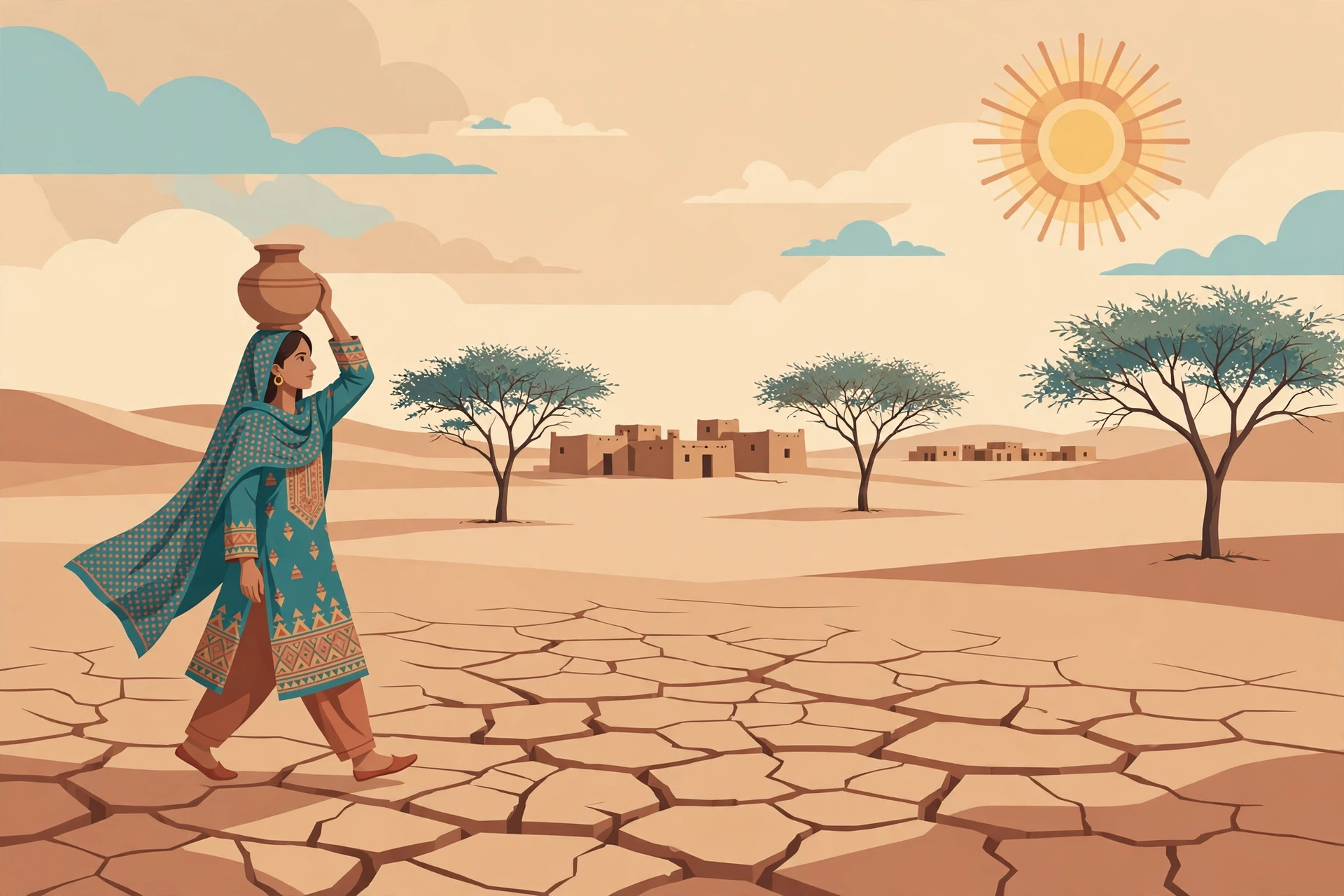
Tharparkar is one of Pakistan’s most drought-prone districts, and its largely rural population depends on rain-fed farming and livestock. Earlier in November 2026, the Sindh government declared Tharparkar a calamity-hit district after briefings said the drought had damaged or destroyed between 85 and 90 per cent of the cultivated crops across all seven of its talukas.
Alongside the cash package, the Chief Minister declared 25 villages in Tharparkar and Umerkot as drought-affected. According to BISP Director General Sanaullah Rind, about 126,000 women in Tharparkar already benefit from BISP, and nearly 152,000 children receive assistance under its related programmes — which is why the BISP database was the natural way to reach the affected families quickly.
Wheat Subsidy for Growers in the Affected Areas
The same announcement also included support for farmers. Wheat growers with up to 25 acres of verified wheat cultivation will receive a subsidy of Rs 4,000 per acre, and farmers selling wheat to the Food Department will get Rs 2,000 per maund delivered. The procurement price for this season has been approved at Rs 4,500 per maund.
The Chief Minister said last year’s wheat support programme paid about Rs 41.84 billion directly to 333,125 verified farmers through the Benazir Hari Card, helping Sindh achieve a record wheat harvest of around 4.9 million tonnes. The government is also preparing data for direct support to farmers in drought-hit areas and working on better water management.
How Is This Different From the Regular Rs 14,500 Qist?
Many families in Tharparkar and Umerkot are asking whether the Rs 8,000 replaces their normal BISP payment. It does not. The two payments are separate:
- Regular Benazir Kafaalat qist: Rs 14,500 per quarter for the October to December 2026 cycle, paid phase-wise through the new six-bank digital wallet system. In Sindh, the July to September qist payment started from 13 November 2026.
- Drought relief: Rs 8,000 per family in three instalments (December, January, February), paid on top of the regular support, only for drought-affected families in Tharparkar and Umerkot with a PMT score up to 40.
So an eligible family in Tharparkar could receive both — the regular quarterly qist and the drought relief — because the relief is additional support for the drought, not a replacement for Kafaalat.
How to Check Your Status
There is no separate portal for the drought relief, so the official BISP channels are the way to check your record:
Method 1: Check on the 8171 Web Portal
- Open the official portal at 8171.bisp.gov.pk in your browser. Type the address yourself — do not follow links forwarded on WhatsApp or Facebook.
- Enter your 13-digit CNIC number without dashes.
- Enter the captcha code shown on the screen and submit.
- Read your result. It will show whether your record is eligible and whether a payment is ready.
Method 2: Check by SMS to 8171
- From your registered mobile number, type your 13-digit CNIC number.
- Send it to 8171.
- Read the reply SMS carefully — it tells you your eligibility and payment status.
If your PMT score is above 40, you will not qualify for this drought relief even if you live in Tharparkar or Umerkot. If your record is not in the BISP database at all, visit your nearest BISP Tehsil Office or Dynamic Registration Centre to complete the free NSER dynamic survey — the survey is free, and nobody is allowed to charge you for it.
Warning: Do Not Pay Anyone for This Relief
Whenever a new relief package is announced, fake agents appear within days. Remember these rules:
- BISP registration, survey and status checks are completely free.
- Real BISP messages come only from the shortcode 8171 — never from an ordinary 03xx mobile number.
- No official message contains a link, asks for a fee, or asks for your CNIC, OTP or wallet PIN.
- Nobody can add your name to the drought relief list for money — selection is done through the BISP survey and database only.
- If someone asks for a fee, report it on the toll-free helpline 0800-26477 or at your nearest BISP tehsil office.
Frequently Asked Questions
What is the bisp tharparkar drought relief 2026?
It is a Rs 5.3 billion Sindh government package announced on 20 November 2026 that gives Rs 8,000 to around 220,000 low-income families in drought-hit Tharparkar and Umerkot, paid in three instalments (1 December 2026, 1 January 2027 and 1 February 2027) through the BISP database. The poverty score limit has been raised from 32 to 40 so more families qualify.
How much will each family receive?
Rs 8,000 per family in total, paid in three instalments. The exact amount of each instalment has not been officially broken down yet, so confirm the per-instalment figure on the official portal 8171.bisp.gov.pk or the helpline 0800-26477 once the first payment is released.
Who is eligible for the Tharparkar drought relief?
Families in Tharparkar and Umerkot whose household is in the BISP record with a PMT (poverty) score up to 40. The survey to identify affected households is under way, and selected families are being geo-tagged with digital wallet accounts opened for them.
Is the Rs 8,000 relief the same as the Rs 14,500 BISP qist?
No. The Rs 14,500 is the regular quarterly Benazir Kafaalat payment for October to December 2026. The Rs 8,000 drought relief is separate Sindh government assistance, paid on top of the regular qist, only for drought-affected families in Tharparkar and Umerkot.
How do I apply for the drought relief?
There is no separate application or portal. Selection is done through the BISP survey and database. If your household record exists with a PMT score up to 40, you may be included. Check your status by SMS to 8171 or on 8171.bisp.gov.pk, and never pay anyone to add your name.
Disclaimer: This website is not the official website of the Benazir Income Support Programme or the Government of Sindh. The information here is for guidance only. For the final and correct status of your payment, always confirm on the official portal 8171.bisp.gov.pk, by SMS to 8171, or on the BISP helpline 0800-26477.